Learn Language VR
Solo project, 6 monthsGame Engine: Unity
The challenge
After interviewing students and some teachers about what the students were still missing in their study program, they explained that they were looking to bridge the gap between real life conversations and assignments in the classroom.Students wanted to get more practice with communicating with others.
My challenge was to make a game where communicating with others took central stage, but guide it so it is still on the current Dutch level of the students (A2/B1).
Constraints:
- This game had to use VR
- This game had to be easy to set up and be flexible in time spent playing(it had to be something that could be used as an extra activity or exercise during class, in the classroom).
My contribution:
- Level design (blocking, layout and environment art), mechanics design, SFX and music selection
My approach
I designed a VR scavenger hunt in a labyrinth, where the VR player has to communicate with real world teammates in order to know his location and what he needs to collect.
- The labyrinth has multiple locations that resemble real life locations
- Objects to look for are both on the list of 2000 most used Dutch words and are a part of these locations.
- The player in VR works together with other players in real life that have a physical top-down map of the labyrinth and the object cards that the VR player needs to look for.
- Communication is key: Player in VR and players in real life don’t see what the other sees.
- Object cards have easy to read location descriptions with markers.
- Labyrinth map has easy to see waypoints for navigation.
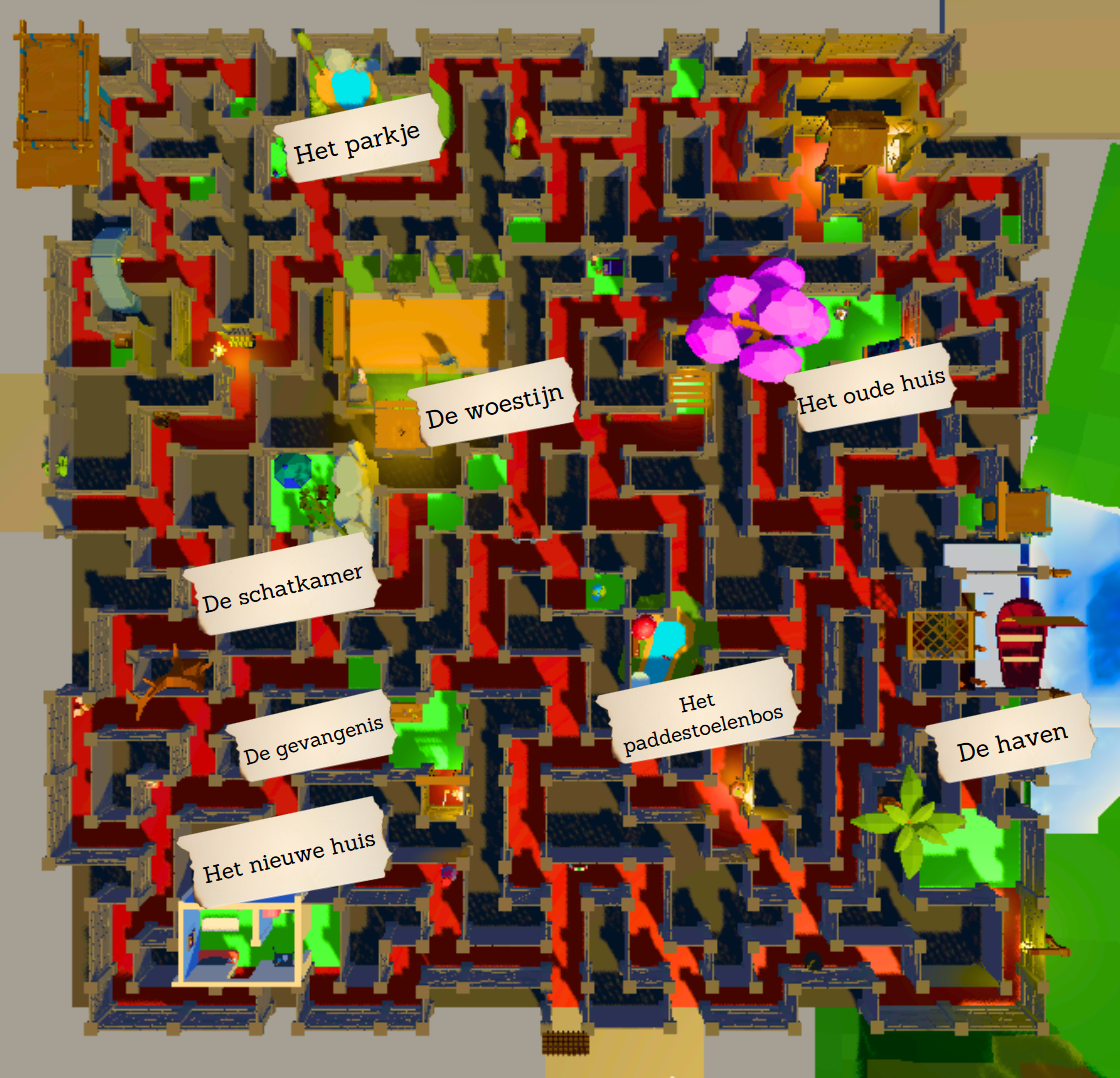
- The labyrinth has multiple rooms that resemble real life locations, to simulate using words that one would in normal conversations.
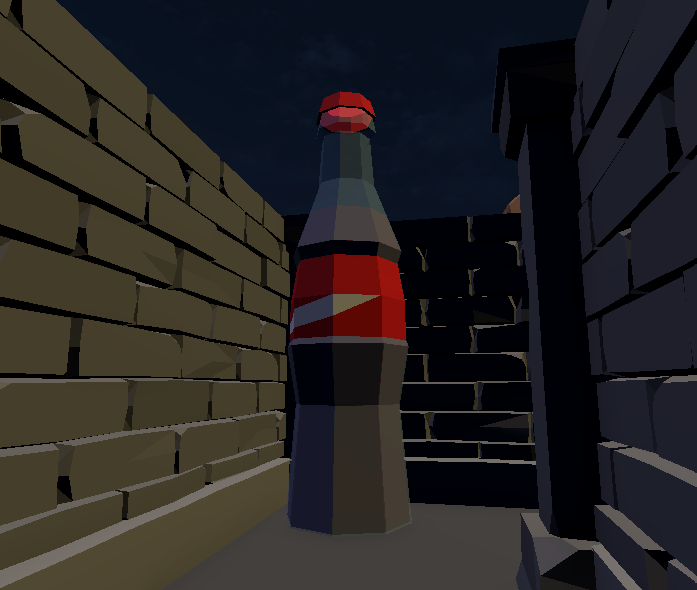
- Labyrinth design has easy to see waypoints for helping conversation: (“where are you? What do you see?”)
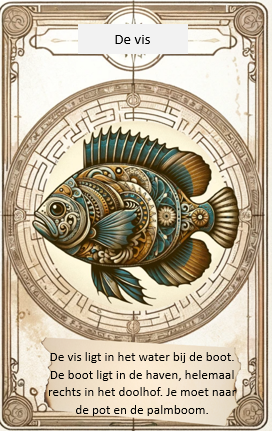
- Object cards have easy to read location descriptions with markers, written by an NT2 Dutch teacher to make sure the language used is at an appropriate level
Paper prototype:
- first time using rooms for objects
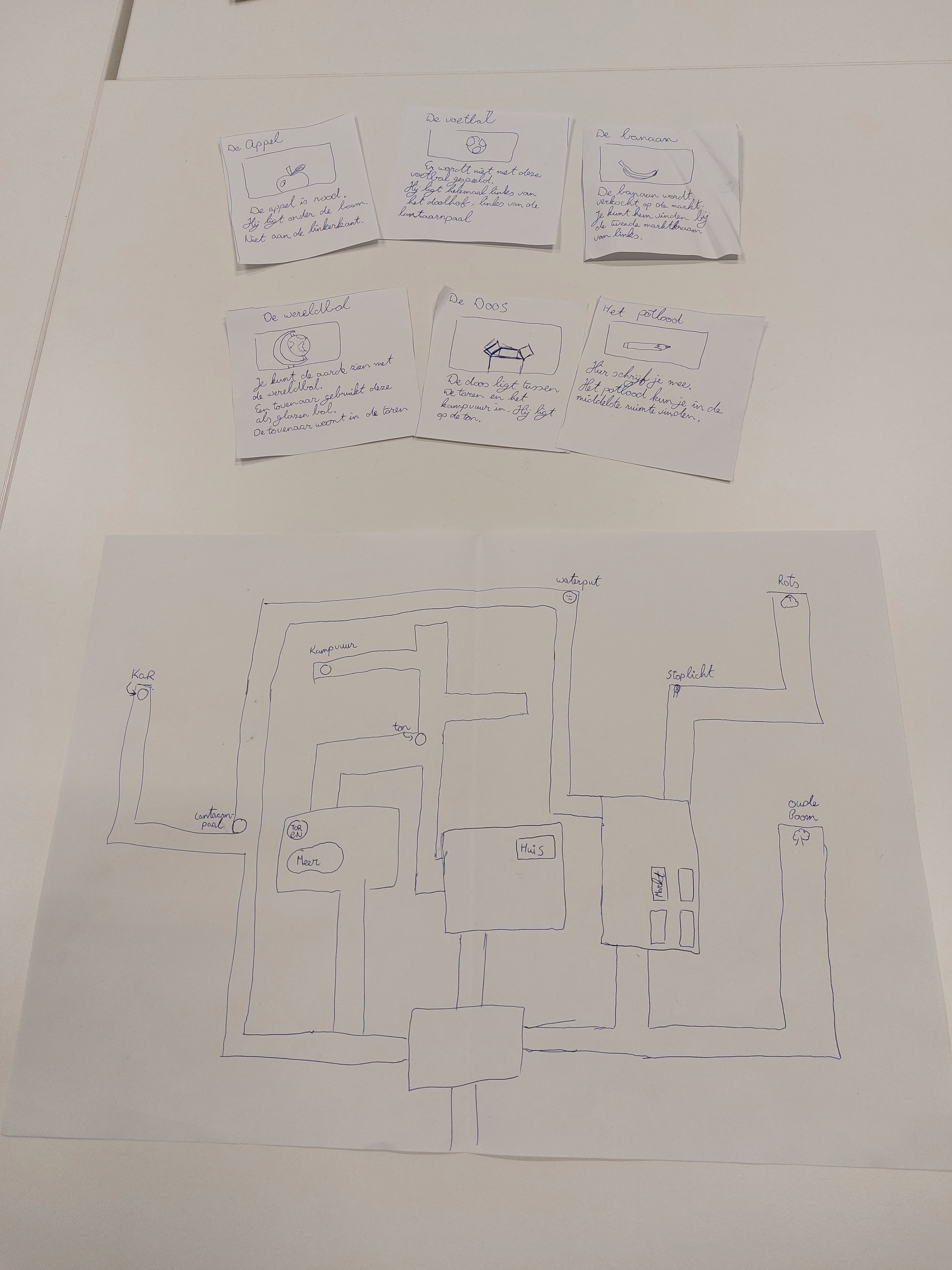
Playtest 1 prototype:
- Validating Core Game loop
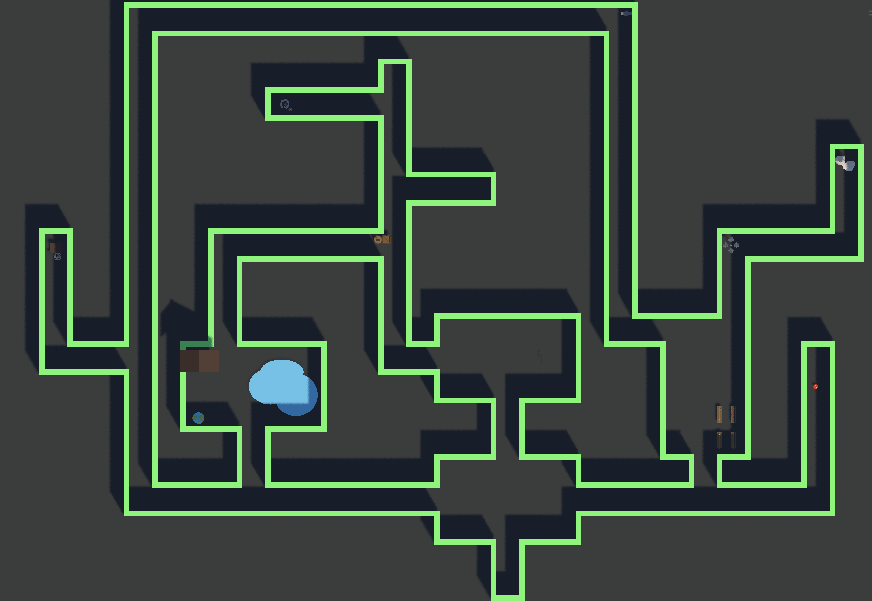
Playtest 2 prototype:
- Final design and class implementation
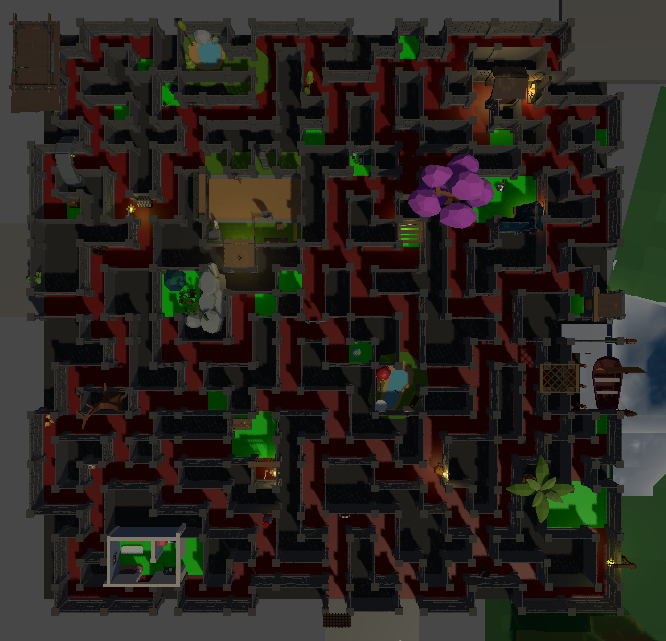
The result
What went well?
- The words and sentences used in the game were understood by players (cards, objects, giving directions)
- In class setting, players actively tried to use Dutch to give the player in VR directions
- Playtesters engaged in play with full enthusiasm and eagerness to learn
What could be improved?
- A smaller labyrinth so the player in VR does not get overwhelmed
- This game should not be in VR: it is too tricky to set up in the classroom